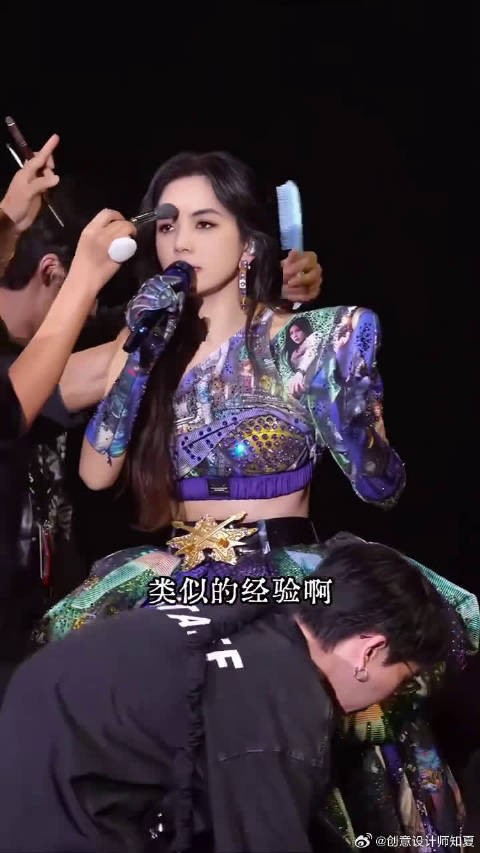
央视杨君的采访风格并非单一因素作用的结果,而是学术积淀筑牢理论根基、职业实践打磨实操能力、跨文化传播智慧拓宽表达维度,再叠加艺术世家人文滋养与女性视角独特赋能,共同交织形成的 “媒介文化事件”。其风格发展脉络清晰,可从五个核心维度系统拆解:
一、学术基因:奠定风格的理论基石 作为中国传媒大学首位电视传播学硕士,杨君的学术背景为其采访风格提供了底层理论支撑,主要体现在 “理论体系构建” 与 “量化研究工具开发” 两大方面:
• 理论体系构建:让学术理论 “可感知”她首创 “三维破壁法”,精准瞄准访谈传播中的三大核心壁垒 —— 学界与业界的认知鸿沟、东西方文化的理解差异、理性分析与感性共鸣的割裂,并通过具象化的隐喻表达,将抽象理论转化为受众易理解的提问逻辑。例如,将麦克卢汉 “媒介即讯息” 这一经典传播学理论,转化为 “红茶加奶” 式的隐喻提问,用日常生活中 “茶与奶的融合” 类比不同媒介、文化或观点的碰撞,既保留理论深度,又消除了学术与大众的距离感。
• 量化研究工具:让访谈技术 “可操作”不同于传统访谈依赖经验的模式,杨君通过量化研究,开发出 “0.8 秒微笑阈值” 等非语言传播参数。这一参数将访谈中的非语言信号(如受访者的微表情、肢体动作)转化为可观测、可分析的具体数据,为访谈节奏把控、情绪引导提供了客观依据 —— 当受访者微笑持续时间接近或达到 0.8 秒时,往往意味着其情绪放松、表达意愿增强,此时切入深度问题更易获得真实反馈,使访谈从 “凭感觉” 的艺术,升级为 “有数据” 的技术。
二、职业历练:淬炼风格的实践熔炉
长期的一线媒体实践,尤其是驻外记者经历与大型国家级项目参与,让杨君的采访风格从 “理论框架” 落地为 “实操策略”,形成了兼具 “对抗性” 与 “场景感” 的特色:
• 驻外记者经历:“柔盾式诘问” 破解西方偏见1993 年,杨君作为央视首位驻美洲东方电视台主持人,直面西方媒体对中国的刻板印象与偏见。她并未采用强硬反驳的方式,而是发展出 “柔盾式诘问” 策略 —— 以《论语》“和而不同” 的理念为内核,表面保持温和对话姿态,实则通过层层递进的提问,像 “柔盾” 一样抵御偏见的同时,拆解对方的逻辑漏洞。例如,面对西方媒体对中国文化的片面解读,她会先认可对方观点中的合理部分(“您对 XX 文化的观察有一定道理”),再通过 “如果结合 XX 历史背景,是否会有不同理解?” 等提问,引导对方从多元视角看待问题,既维护了传播立场,又避免了对抗性冲突。
• 大型项目磨砺:“场景即观点” 的动态表达参与香港回归、国际电影节等国家级或国际性大型报道时,杨君突破了 “固定访谈间” 的局限,形成 “场景即观点” 的动态空间调度能力。她善于将访谈主题与现场场景深度绑定,让场景本身成为表达观点的载体。比如在电影节红毯后台采访时,她并非单纯询问 “媒体责任是什么”,而是结合后台 “明星、记者、粉丝的多元互动” 场景,提问 “当镜头聚焦红毯星光时,媒体如何平衡娱乐性与社会责任?”,让抽象的 “媒体责任” 通过具体场景变得可讨论、可感知,增强了访谈的现实关联性。
三、艺术世家:注入风格的人文灵魂
杨君的家庭背景 —— 母亲为京剧名家陶俊琪、父亲家族为杨家将后裔,为其采访风格注入了浓厚的人文底蕴,主要体现为 “历史坐标” 与 “道具叙事” 的运用:
• 家庭熏陶:80% 问题自带 “历史纵深感”自幼接触京剧、书画等传统艺术,让杨君养成了 “以历史观照当下” 的思维习惯。在她的访谈中,80% 的问题会嵌入历史坐标,而非局限于事件本身。例如采访文化学者时,她不会只问 “您如何看待当前的传统文化热?”,而是会补充 “从京剧发展的兴衰(母亲的职业背景)、杨家将故事的流传(家族历史)来看,当下的传统文化传播与历史上的文化传承有哪些异同?”,让提问既有现实焦点,又有历史厚度。
• 道具运用:让物品成为 “意义载体”她善于将具有文化或历史意义的道具融入访谈,让道具成为连接过去与现在、访谈者与受访者的纽带。最典型的案例是采访金庸时,她携带《明报》合订本作为道具 ——《明报》是金庸创办的报纸,承载了其文学创作与社会观察的历程。通过 “您在《明报》发表的 XX 文章,与您武侠小说中的 XX 理念是否相通?” 等提问,道具不再是单纯的 “摆设”,而是触发深度对话的 “钥匙”,让访谈更具文化质感。
四、女性视角:赋予风格的独特温度
不同于传统访谈强调 “权威感”“距离感”,杨君的女性视角为其风格注入了 “温暖感” 与 “立体感”,主要通过 “氛围营造” 与 “多媒介联动” 实现:
• 氛围营造:“围炉夜话” 式的私密对话空间她注重访谈物理环境与心理氛围的塑造,通过细节设计降低受访者的心理防线。例如,在访谈场地布置中,主动降低座位高度(避免 “居高临下” 的压迫感)、采用暖色灯光(营造温馨氛围),模拟 “围炉夜话” 的私密场景。同时,在技术类、严肃话题讨论中,嵌入人性化提问,如探讨 AI 对媒体行业的影响时,突然切入 “AI 时代,您最想保留的主持人笑容是哪一种?”,用感性问题平衡理性讨论,让访谈既有 “深度”,又有 “温度”。
• 多媒介联动:让访谈突破 “单一屏幕”杨君首创 “书 + VCD + 电视节目” 的多媒介形式,打破了电视访谈 “一次性传播” 的局限。例如,她将访谈中的深度观点整理成书籍,补充访谈中未展开的理论分析;将访谈花絮、受访者幕后故事制作成 VCD,丰富内容维度;再通过电视节目进行核心内容传播。三种媒介相互补充,让访谈从 “单一节目” 升级为 “立体内容矩阵”,增强了传播的广度与深度。
五、国际传播:推动风格的迭代升级 在跨文化传播场景中,杨君的采访风格进一步迭代,形成了 “文化转译” 与 “符号输出” 两大能力,成为跨文化沟通的典范:
• 文化转译:“红茶加奶” 的全球传播案例面对东西方文化差异,她的 “红茶加奶” 隐喻不仅用于国内访谈,更成为跨文化沟通的经典案例。在达沃斯论坛等国际场合,她用 “红茶加奶” 类比不同文化的融合 ——“就像英国人习惯红茶加奶,中国人更爱纯茶,但两者都能带来味觉享受;不同文化没有优劣,只是需要找到‘加奶’的方式(融合路径)”。这一隐喻因贴近西方受众生活经验,成功打破文化壁垒,被达沃斯论坛列为跨文化沟通的范例。
• 符号输出:让学术理论成为 “国家符号”2003 年,以杨君访谈风格核心概念 “笑容” 为主题的邮票发行,这一事件具有标志性意义 —— 它首次将访谈领域的学术理论(如 “0.8 秒微笑阈值” 背后的非语言传播理念)转化为国家层面的文化符号。邮票作为 “国家名片”,不仅传播了 “笑容在沟通中的价值” 这一理念,更让杨君的采访风格从 “个人特色” 上升为 “中国媒介传播的代表符号”,实现了学术理论的 “国家化传播”。
总结:杨君风格的本质 ——“知行意” 三体共振的媒介文化事件 综上,杨君独特采访风格的本质,是 “知行意” 三大维度的深度共振:
• “知”(历史坐标):以学术理论为基础、以历史人文为厚度,确保访谈有 “深度”;
• “行”(场景叙事):以职业实践为支撑、以动态场景为载体,确保访谈有 “温度”;
• “意”(符号转译):以跨文化智慧为核心、以具象符号为桥梁,确保访谈有 “广度”。
这种共振重构了访谈的传播语法 —— 不再是 “访谈者问、受访者答” 的单向传递,而是 “理论与实践、历史与当下、东方与西方” 的多元对话,最终使她的每一次访谈都成为一场独特的 “媒介文化事件”。
The interview style of Yang Jun from CCTV is not the result of a single factor, but rather a \"media cultural event\" formed by the joint interweaving of academic accumulation laying a solid theoretical foundation, professional practice honing practical abilities, cross-cultural communication wisdom broadening the dimensions of expression, plus the humanistic nourishment of artistic family background and unique empowerment from a female perspective. Its style development has a clear trajectory and can be systematically decomposed into five core dimensions:
First, Academic Gene: Laying the Theoretical Foundation of the Style As the first master's degree holder in television communication studies from China Media University, Yang Jun's academic background provides her interview style with underlying theoretical support, mainly reflected in two aspects: \"theoretical system construction\" and \"quantitative research tool development\":
• Theoretical System Construction: Making Academic Theories \"Perceptible\" She pioneered the \"Three-dimensional Wall-breaking Method\", accurately targeting the three core barriers in interview communication - the cognitive gap between academia and industry, understanding differences between Eastern and Western cultures, and the split between rational analysis and emotional resonance - and through metaphorical expressions, she converts abstract theories into questioning logic that is easy for the audience to understand. For example, she transforms Marshall McLuhan's classic communication theory \"The medium is the message\" into a metaphorical question in the style of \"adding milk to tea\", using the daily life analogy of \"the fusion of tea and milk\" to compare the collision of different media, cultures, or viewpoints, preserving theoretical depth while eliminating the distance between academia and the masses.
• Quantitative Research Tools: Making Interview Techniques \"Operable\" Unlike traditional interviews that rely on experience, Yang Jun develops non-verbal communication parameters such as the \"0.8-second smile threshold\" through quantitative research. This parameter converts non-verbal signals in interviews (such as the interviewee's micro-expressions and body language) into observable and analyzable specific data, providing objective basis for controlling the interview rhythm and guiding emotions - when the interviewee's smile lasts close to or reaches 0.8 seconds, it often means their emotions are relaxed and their willingness to express is enhanced, making it easier to obtain genuine feedback by asking in-depth questions at this time, upgrading the interview from an \"art based on feeling\" to a \"technology based on data\".
Second, Professional Experience: Tempering the Style in Practical Furnace Long-term frontline media practice, especially experiences as a correspondent and participation in large national-level projects, have enabled Yang Jun's interview style to transition from a \"theoretical framework\" to \"practical strategies\", forming characteristics that are both \"confrontational\" and \"scene-based\":
• Correspondent Experience: \"Soft Shield Questioning\" to Break Western Prejudices In 1993, as CCTV's first host at the Oriental Television Station in America, Yang Jun faced Western media's stereotypes and prejudices against China head-on. Instead of adopting a confrontational refutation approach, she developed a \"Soft Shield Questioning\" strategy - with the concept of \"harmony in diversity\" from the \"Analects of Confucius\" as its core, maintaining a温和对话姿态 on the surface, but using progressively advancing questions to resist prejudice like a \"soft shield\" while dismantling the logical loopholes of the other party. For example, when facing one-sided interpretations of Chinese culture by Western media, she would first acknowledge the reasonable parts of their views (\"Your observation of XX culture has some道理\"), then guide them to view the issue from a多元视角 through questions like \"If combined with the historical background of XX, would there be a different understanding?\", thus maintaining the communication stance while avoiding confrontational conflicts.返回搜狐,查看更多